Overview
Cities in sub-Saharan Africa generate more than 180 million tonnes of waste each year, yet up to 90% is poorly managed. Informal waste pickers recover much of what is recycled, but their work is rarely recorded or valued, while waste contractors struggle with fragmented payments and cashflow gaps that disrupt services.
Allen Kimambo, a Tanzanian engineer and CEO of Zaidi Recyclers, founded Zaidi App to bring structure, transparency and finance into the system. The platform registers informal waste contractors and tracks their footprints; it also maps households and collectors, tracks transactions in real time, integrates digital payments, and provides short-term operational finance through its FLEX model.
Already operating across multiple regions in Tanzania and expanding regionally, Zaidi App has mapped hundreds of thousands of households, registered thousands of waste workers, and is processing high-frequency transactions that would previously have been recorded manually, if at all.
The challenge
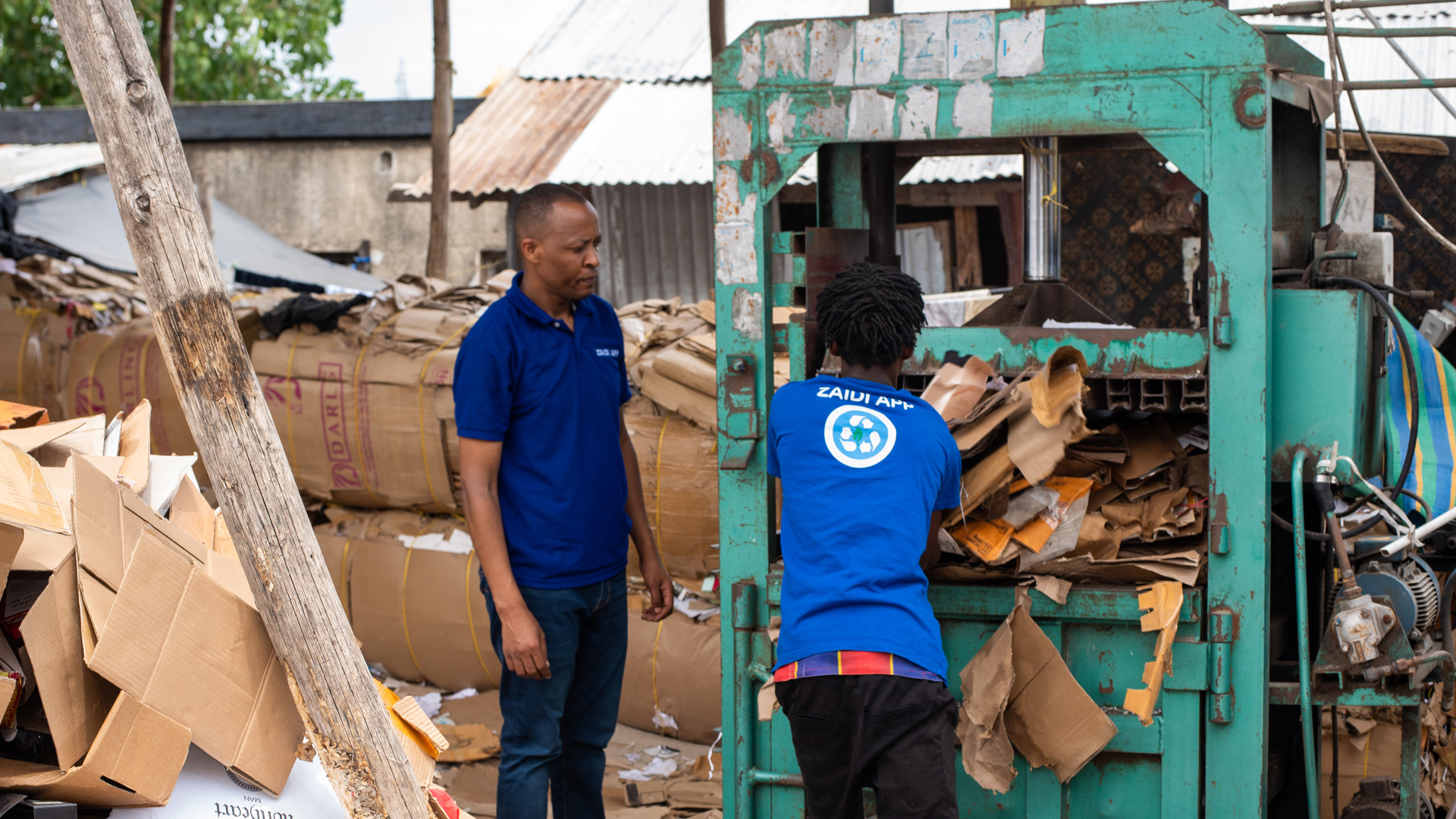
In many African towns and cities, waste collection operates in fragmented, semi-formal systems. Payments are often collected in person and recorded on paper; collectors rely on door-to-door cash collection, and companies lack reliable data on who has paid and when. Without visibility over revenue flows, waste contractors struggle to manage cash flow, pay workers consistently, or maintain vehicles and fuel supplies.
With support from the Africa Prize, the next phase will focus on strengthening technology infrastructure, embedding financial intelligence features, and scaling the model regionally.
In Tanzania, Allen encountered an additional structural barrier: waste contractors must often pay government “control numbers” upfront before collecting fees. These control numbers are issued by the government and serve as a reference for a specific payment to be made. Delays in funds clearing, which can take days, weeks, or even months, significantly reduce efficiency and can stall operations, leaving waste uncollected for extended periods of time.
At the same time, informal waste pickers, who recover a significant share of recyclable materials, rarely have proof of their contribution. Without data, their impact is invisible. The lack of visibility limits their ability to negotiate fairer pay, access essentials such as insurance or qualify for financial services.
The idea for Zaidi App began in 2017, when Allen was returning from an environmental leadership programme in Morocco. On the flight home, he began sketching how technology could make waste workers’ contributions visible, trusted, and valued.
The innovation
Zaidi App was developed by Allen and his team at Zaidi Recyclers and launched in late 2022 to serve as a digital backbone for waste management systems.
The platform operates through two main components: a mobile application and a real-time analytics dashboard.
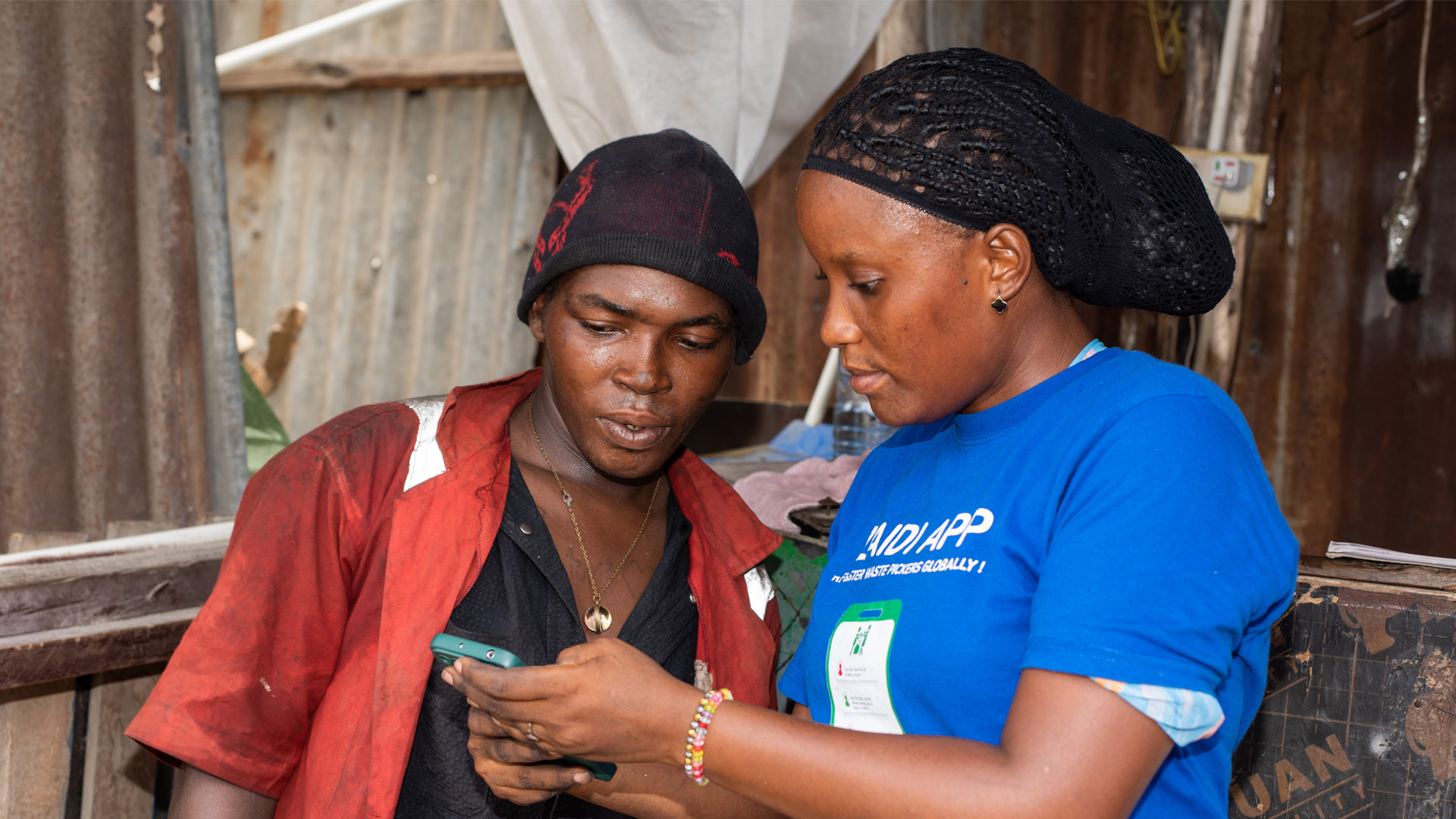
Through the mobile app, waste contractors can register households and businesses using geotagged mapping, record collections and payments instantly, and track their individual performance and earnings over time.
Companies gain access to a live dashboard showing payment histories, customer records, collection volumes, and operational performance across regions. An integrated payments layer connects to mobile money providers and payment aggregators, enabling digital fee collection and reconciliation.
Additional layers under development include a credit scoring mechanism and micro-insurance integration, designed to convert work history into financial credibility.
Rather than being built from a static research model, the system was developed iteratively with contractors and collectors, adapting features in real time based on user feedback.
Video transcript
Through my father‑in‑law, who was an engineer, he’s the one who inspired me to pursue a career in engineering, as I knew and saw it as an opportunity to change the lives of people in the world.
Our innovation helps people and organisations sort and recycle their waste easily. And for the waste pickers, it helps them track the environmental, economic, and social impact so that, in the end, they can earn financial instruments such as loans and insurance.
Winning the Africa Prize would mean so much to me, and mostly for the waste pickers who, day in and day out, go out and pick waste for recycling to make sure that our world is clean and safe. For them, they will be able to be recognised and valued, and earn incentives or earn the value of what they are bringing to the world.
The impact
Zaidi App is already in use by private waste contractors across multiple regions in Tanzania, with expansion planned into neighbouring markets. The platform processes transactions at high frequency and has digitised large volumes of operational data that were previously fragmented or paper based. To date, the work supported by Zaidi has engaged nearly 4,500 waste pickers, tracked 1.5 million tons of waste data, and recorded more than 100,000 households with millions of payment recording. A new project is now approved and will register 10,000 waste pickers in one region in East Africa.
For companies, it improves revenue visibility and planning. For households, it supports more reliable collections. For waste pickers and collectors, it creates proof of work, and the foundation for access to finance and insurance.
Alongside the platform, Allen, together with the TakaNiAjira Foundation and Tanga City, and with support from the Botnar Foundation and Innovex under the Tanga Yetu programme, is implementing a women-led waste bank (Taka Benki) model in Tanzania. Eight units have already been established in Tanga and are operated by women, strengthening the link between digital waste tracking and community-based recycling systems.