Overview
Chemical engineer and Professor in Water Quality Engineering, Dyllon Randall, founded Pee-Cycling with co-founder Caitlin Courtney, to rethink what he saw as a linear “flush and forget” system.
Millions lack adequate sanitation across Africa and cities face mounting water scarcity, while farmers face rising fertiliser costs. Yet water is routinely used to flush away human waste, including urine, that could instead be recycled to support local food production if isolated and converted into safe fertiliser.
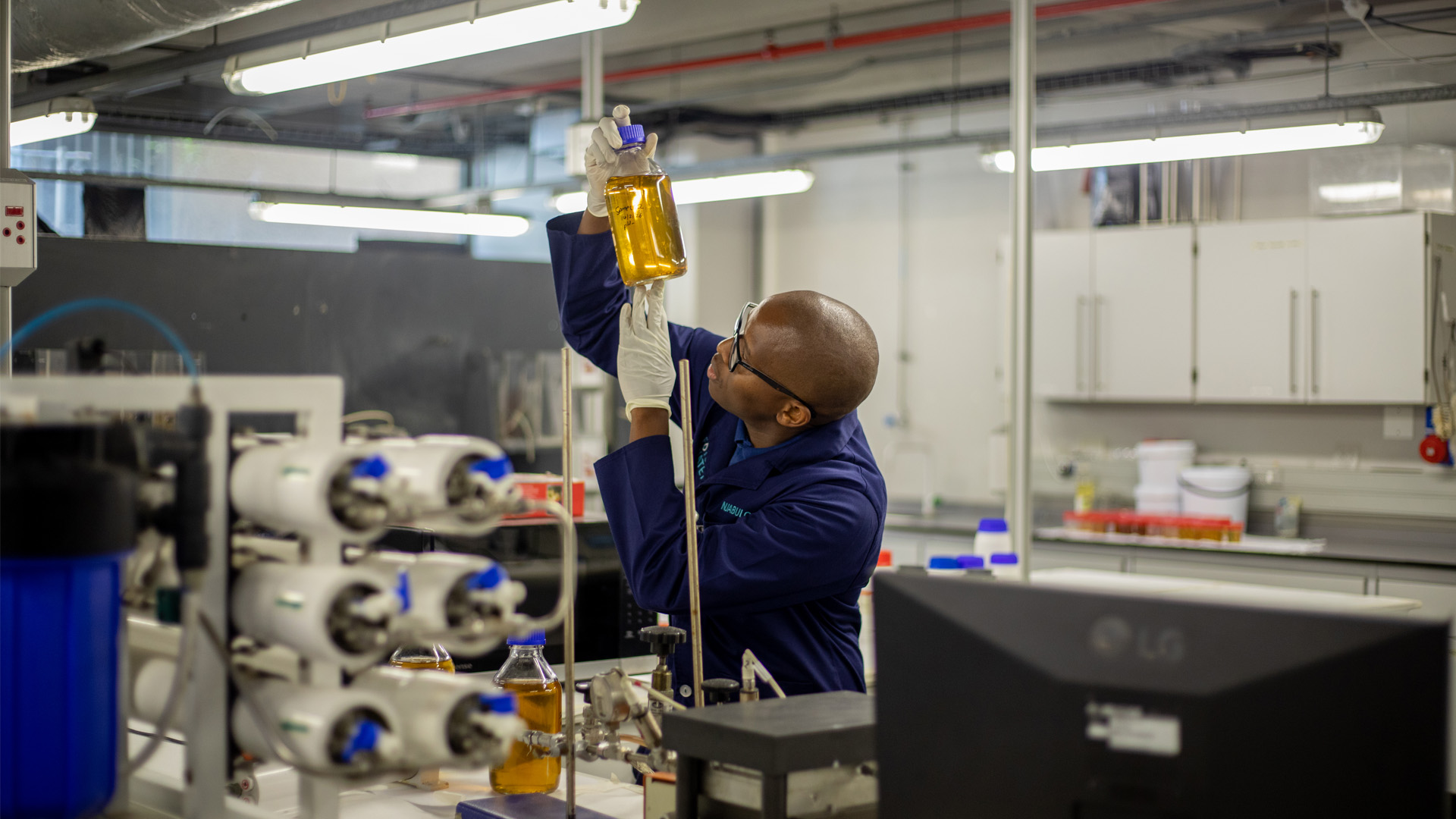
Dyllon's modular urine-to-fertiliser recovery system collects urine via purpose-built urinals, then stabilises it to prevent nutrient loss, and concentrates it using reverse osmosis to produce nursery high-grade liquid fertiliser and reusable water.
The challenge
In 2017, Cape Town was on the brink of “Day Zero”, the moment municipal taps were predicted to run dry. Residents were limited to 50 litres of water per person per day. Yet even during this crisis, potential drinking water continued to be used to flush urinals.
Having just completed research in Switzerland under the Reinvent the Toilet Challenge, developing a process to produce fertiliser from urine, Randall recognised a fundamental flaw in conventional sanitation systems. Valuable nutrients are diluted with potable water, transported as waste, and treated as pollutants.
At the same time, African countries remain heavily dependent on imported fertilisers, exposing farmers to global price shocks. Human urine contains nutrients excreted by the body, including nitrogen and phosphorus, both essential for crop growth. Yet this resource is routinely discarded. The challenge was to redesign sanitation to conserve water and recover nutrients safely and efficiently at source.
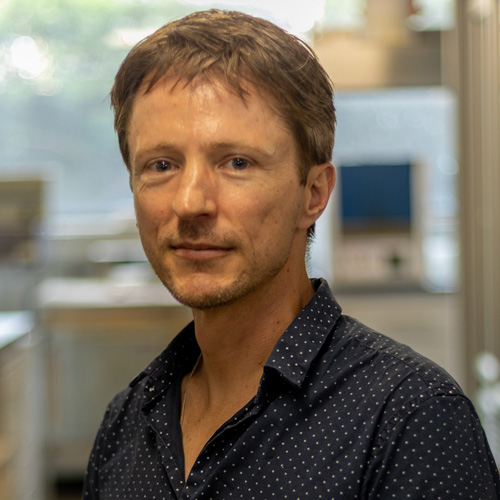
Being in academia, I want the Africa Prize to help move this from university research to a commercial entity, with business and leadership mentorship to navigate the next scaling phase.
The innovation
Randall and co-founder Caitlin Courtney, his first PhD student, developed a modular three-stage system: harvesting, stabilisation and concentration.
Urine is collected through specially designed waterless urinals or no-mix toilets that separate urine from other waste streams at source. A stabiliser prevents enzymatic breakdown that would otherwise release ammonia and cause nitrogen loss.
The stabilised urine undergoes a pretreatment step to protect the subsequent membrane system. This system utilizes reverse osmosis (RO), a membrane-based process similar to seawater desalination, to concentrate the solution.
Unlike distillation or evaporation-based alternatives, the process removes water without converting the liquid to steam and back again, significantly reducing energy demand.
The result is a concentrated liquid fertiliser and clean water as a by-product. A full-scale pilot plant, occupying approximately 12 to 15 square metres, can process up to 3,200 litres of urine per day. In 2024, the team confirmed that laboratory results translated almost identically at full-scale.
Video transcript
I pursued an engineering degree because I loved mathematics and chemistry in school. But it's been so much more than that. It’s allowed me to focus on curiosity driven research, but that's also impactful and that has a positive effect on society.
So our innovation focuses on developing systems to collect human urine, treat it on-site and then recover valuable nutrients, that are plant essential for fertiliser production. And then further process it into water that we can use for other means.
So winning the Africa Prize would be an amazing opportunity to showcase the work that we've spent the past 10 years working on. It would say to the rest of the world that Africa can develop innovative solutions that can change the world.
The impact
Waterless urinals linked to the system have operated at the University of Cape Town since 2017. A 2024 scale-up to a full-scale pilot plant confirmed commercial viability, with the facility now capable of processing up to 3,200 litres per day. With partnerships in place with facilities management companies for urine collection, the innovation is moving from research towards commercial deployment.
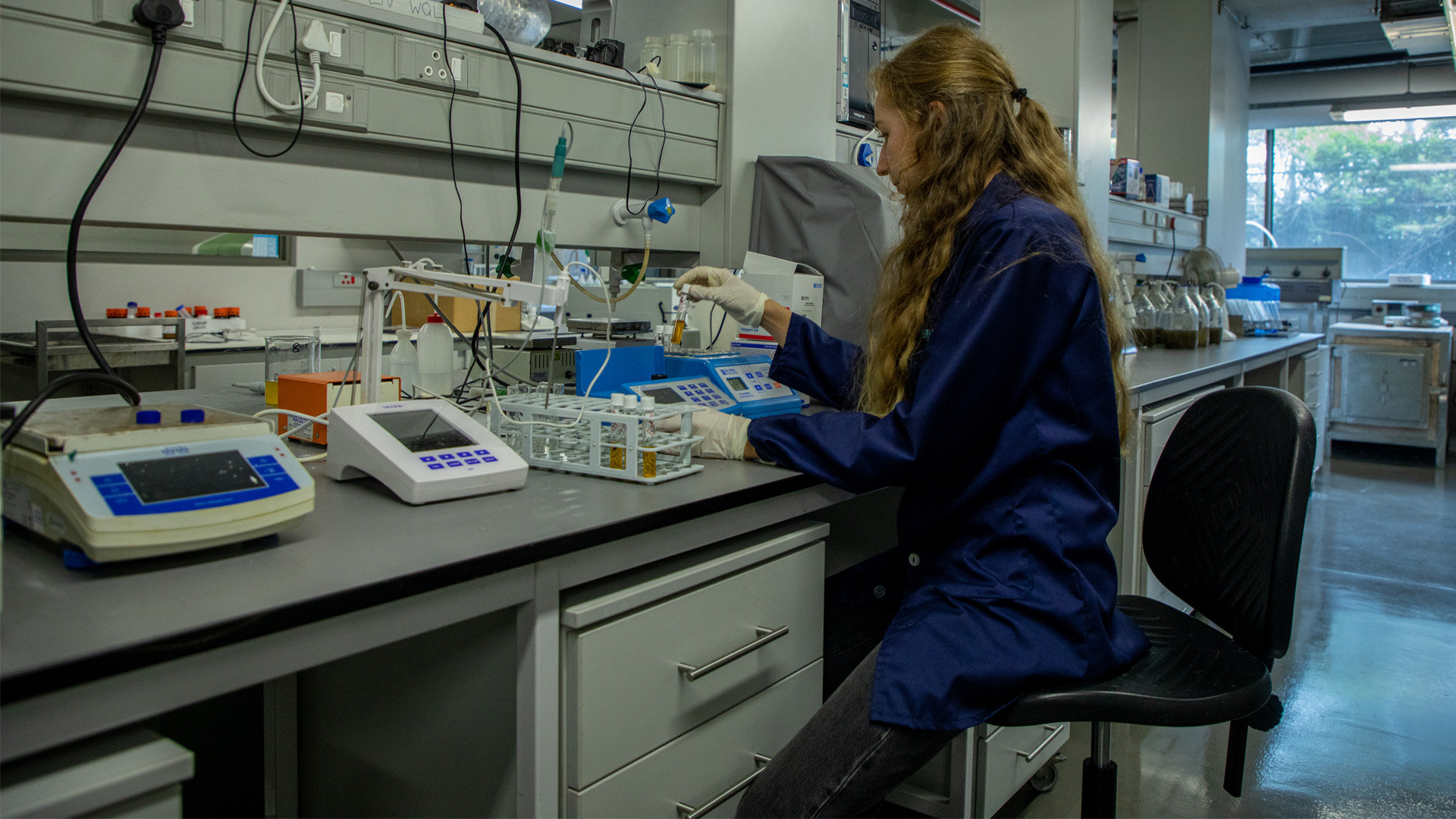
Processing 1,000 litres of urine per day saves around 2,000 litres of potable water, reduces nutrient discharge into wastewater systems, and lowers indirect carbon emissions associated with fertiliser production. Laboratory tests confirm nursery-grade fertiliser quality.
Through a partnership with Bidvest, urine is collected and transported for processing rather than being disposed of as waste.
Public response has demonstrated unexpected behavioural impact. After early media coverage, people began visiting the building specifically to use the fertiliser-producing urinals, motivated by the idea that their waste could contribute to something useful.