Overview
Mamane Kabirou Ousseini founded Likita Care with cofounder Seydou Gnaly Ousmane in 2019. In Niger, imported monitoring equipment in hospitals and clinics is often expensive, difficult to maintain, and can sit unused when parts or specialist support are unavailable. Likita Care addresses this gap with an integrated medical monitoring platform designed and manufactured in Niger, bringing multi-parameter monitoring, cardiac examinations, prenatal monitoring, telemedicine and digital care protocols into a single connected system.
A complete kit includes installation and one-year of training and maintenance to help facilities to adopt advanced monitoring without depending on hard-to-service imports. In the last two years, the team has produced and validated more than 70 devices. Deployed across Niger’s five largest medical centres, the system enables faster triage, improved maternal and neonatal monitoring, and more consistent clinical decision-making.
The challenge
In many hospitals, the limiting factor is not clinical knowledge but the absence of dependable, maintainable equipment that provides timely patient data. Monitoring is often infrequent or manual, which can delay detection of deterioration and force clinicians to make decisions without continuous, reliable measurements.
Mamane Kabirou Ousseini, Co-founder and CEO of Likita Care, encountered this problem while working on equipment maintenance and repairs in hospitals. He repeatedly saw imported devices fall out of service because spare parts were hard to source, maintenance expertise was limited, and equipment was not adapted to local realities. Clinicians would often work without any monitoring equipment, which proved even more difficult when staffing was stretched and one nurse or doctor was responsible for several patients at once.
He saw that even when the need was clear, adoption could often be blocked by upfront costs and weak after-sales support, making affordability and maintenance as critical as the technology itself.

I’m looking to gain mentorship, particularly in business scaling and manufacturing strategies. The visibility from the Prize will help us attract partners and take Likita Care from a pilot project to a mass market solution that can save lives across the continent. Being shortlisted is already an honour.
The innovation
Mamane co-founded Likita Care to make monitoring reliable and practical in resource-limited settings, supported and serviced locally, and designed around real ward workflows. The solution is built as a three-part system: connected hardware, a clinical software platform, and local digital fabrication that keeps devices affordable and repairable.
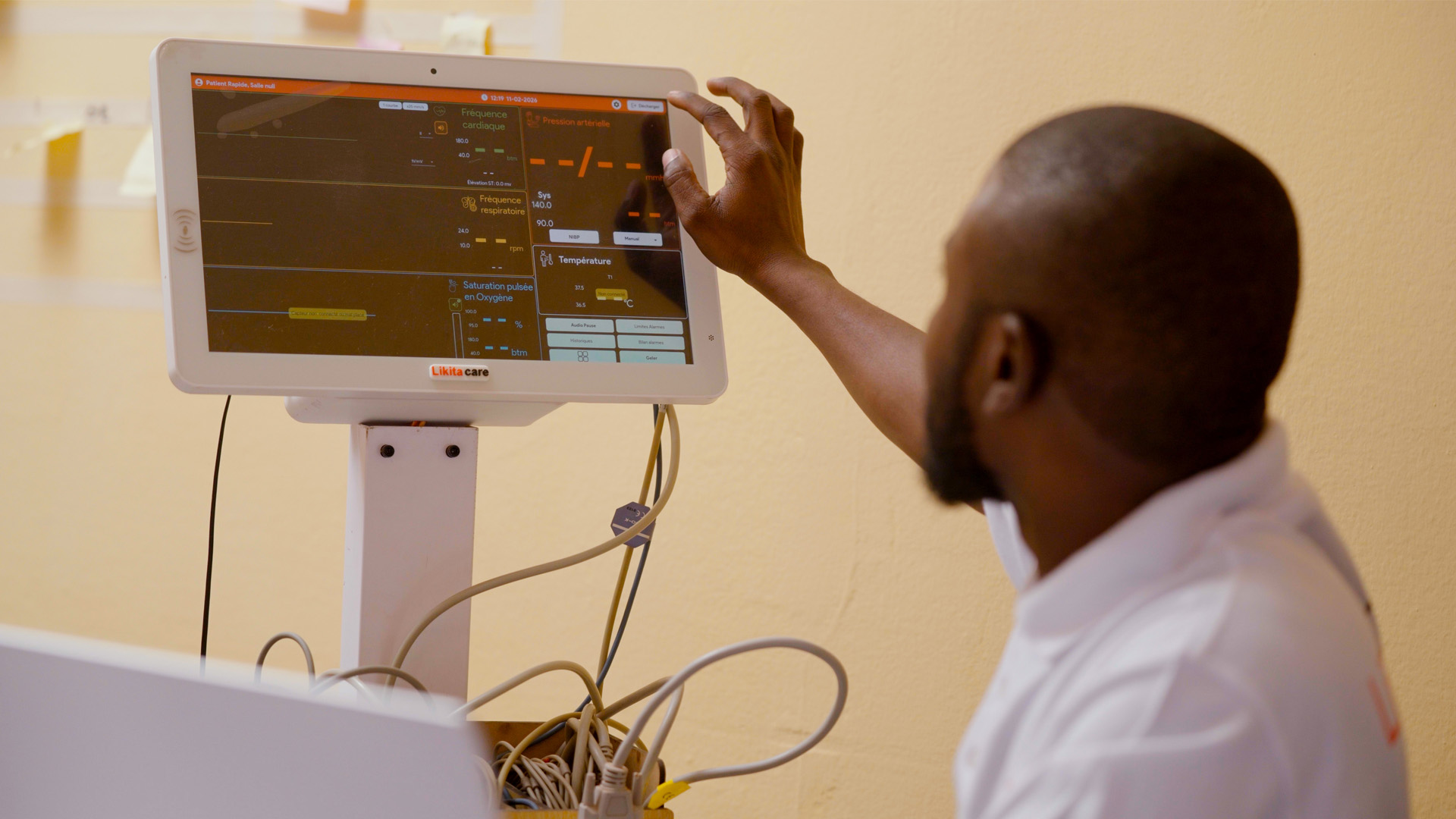
The hardware suite includes a patient monitor, cardiograph, cardiotocograph and temporal thermometer. Together, these track 12 vital parameter indicators for adults, neonates and foetuses, including heart rate, oxygen saturation, respiration rate, temperature, ECG readings and uterine contractions.
The accompanying software centralises patient data, supports telemedicine and enables the digital integration of clinical protocols such as the electronic partogram. A central dashboard helps staff to monitor multiple patients from one screen, strengthening triage and prioritisation.
An embedded AI module provides real-time clinical interpretation of measured vital signs and the patient’s current clinical status. It is designed to function even with limited connectivity and to support decision-making where training gaps exist.
Likita Care is designed to scale through a dual delivery model that balances impact with financial sustainability. For governments, NGOs and international organisations, the team offers direct sales of complete kits to enable large-scale deployments, including installation, training and maintenance. In parallel, a subscription-based “LikitaCare as a Service” option allows public and private facilities to access the devices and software with ongoing technical support. This reduces the barrier of heavy upfront investment and helps to ensure continuous operational time through structured servicing and upgrades.
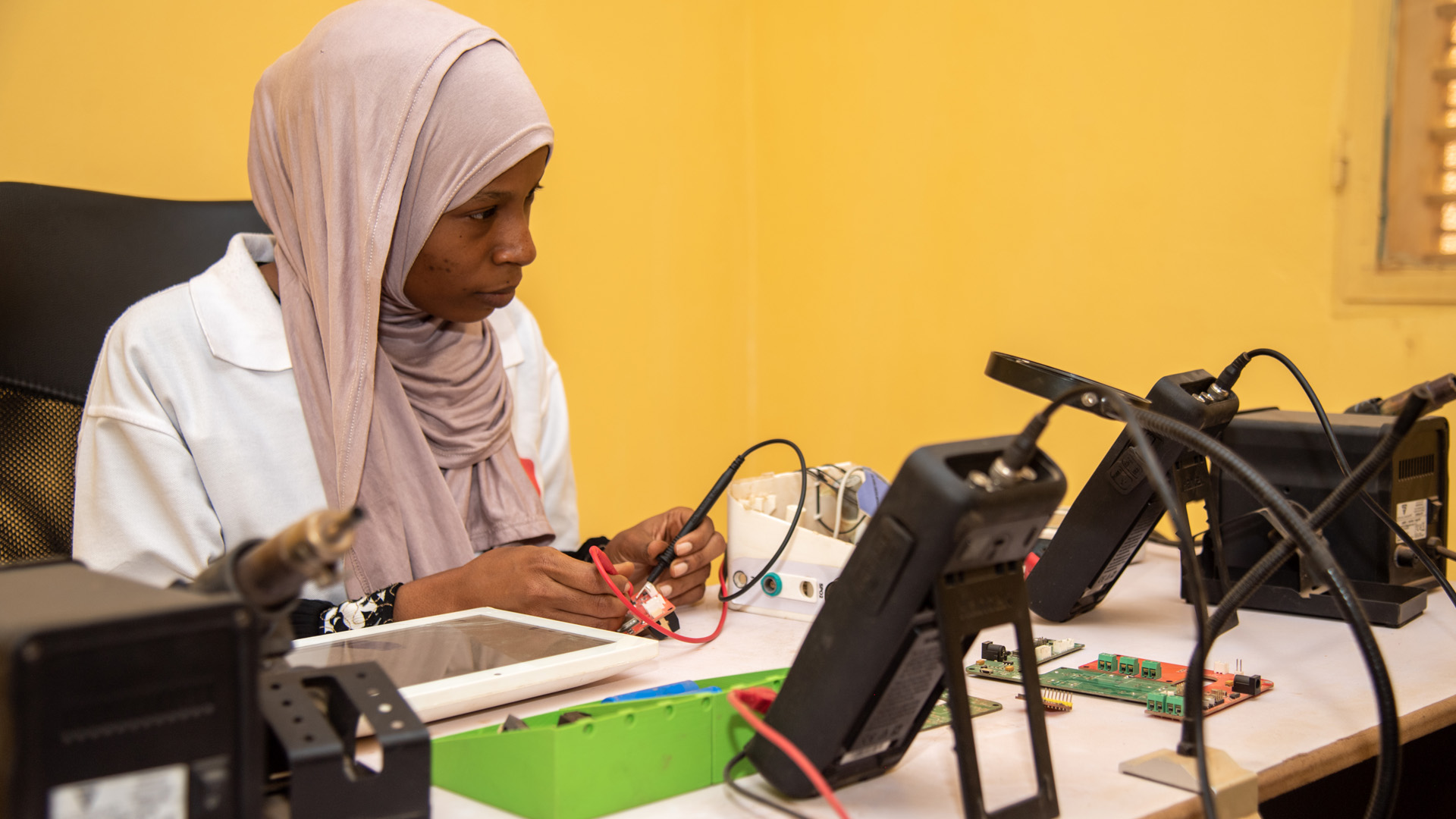
Devices are produced in Niger using a mix of 3D printing, CNC (computer numerical control) cutting and electronics assembly, with the company importing only essential components rather than complete systems. This shortens supply chains and enables quicker repairs and after sales support, keeping equipment in service.
The company is supported by a cross-functional team spanning hardware, software and clinical input, ensuring the product remains both technically robust and clinically relevant.
Video transcript
I have always been driven by the desire to turn challenge into tangible solution. I chose engineering because it’s provided me the practical tools that I need to build solution with impact. My innovation is Likita Care — that is mean doctor care in our local language. Likita Care is an integrated medical monitoring platform that provide for health worker the tools that they need to doing multiple types of monitoring with one solution. It’s also a combination of local manufacturing, hardware and software solution.
Winning Africa Prize will provide and validate that Niger is a rising hub for high tech innovation. It will provide also a realistic resource and a global credibility that we need to transition from a successful pilot to a certified healthcare leader across West Africa.
The impact
Likita Care strengthens the quality of care by ensuring that doctors and nurses are no longer working without real-time data. By centralising monitoring and enabling one screen to display information for 10 to 20 patients at once, the system helps clinicians respond faster and prioritise more effectively in high-pressure environments.
After local validation and clinical testing with more than 100 patients and more than 4,000 collected data points, the team has produced and deployed more than 70 monitoring units in Niger, with five medical centres using the system. Hospitals report strong feedback and repeat orders, supported by responsive after-sales service, including on-site fixes within 24 hours where needed.
With the support of the Africa Prize, the team plans to commercialise the monitoring kit in Niger and scale deployments, first consolidating nationally, then preparing for regional expansion into neighbouring markets with similar needs.