Overview
Nearly two-thirds of urban commuters across sub-Saharan Africa rely on public transport, yet many face long waits, overcrowding and unpredictable schedules. In cities like Kigali, passengers often stand at bus stops for over an hour without knowing when the next bus will arrive, while operators dispatch vehicles with little visibility on demand.
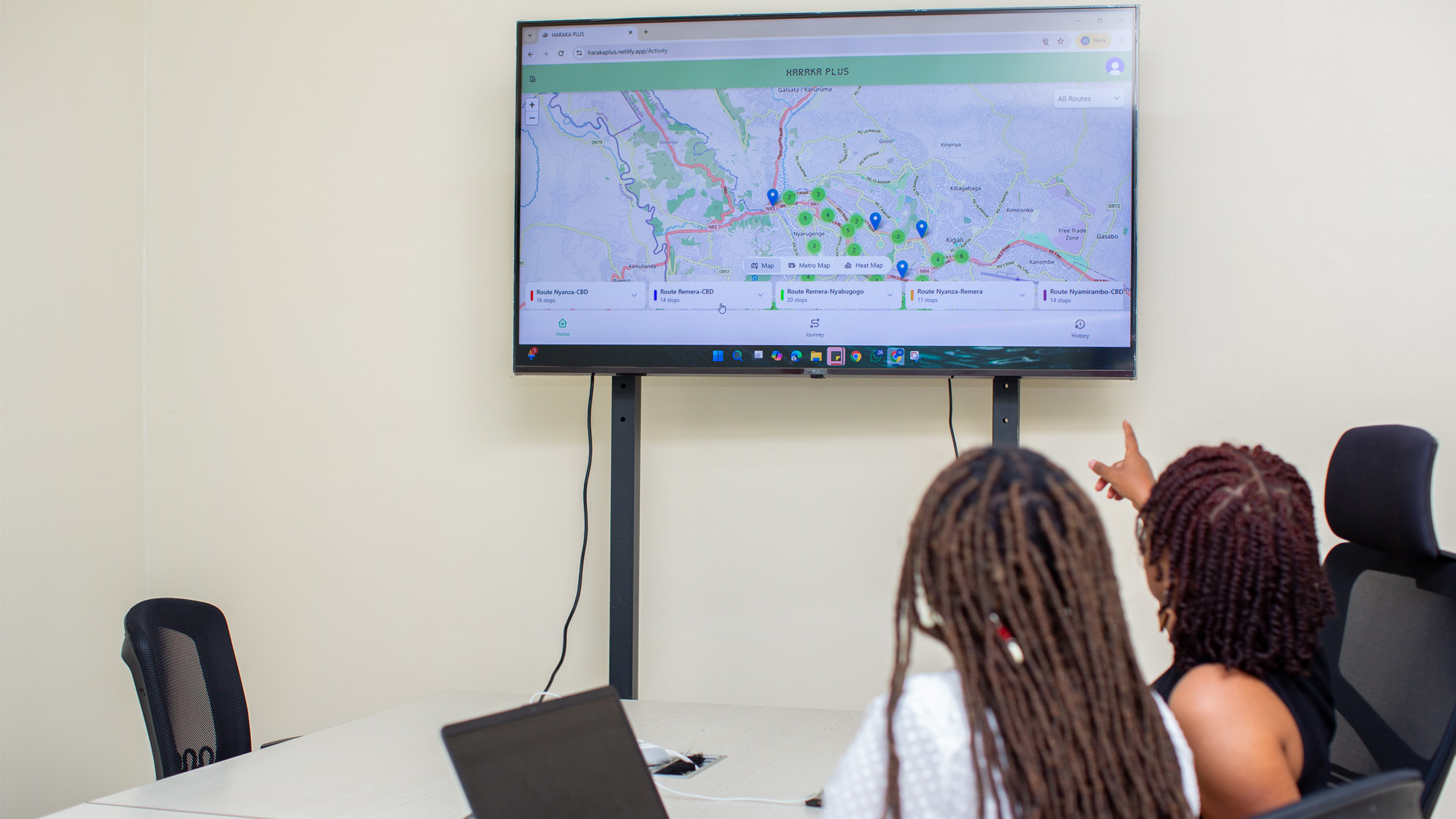
HarakaPlus addresses this disconnect. The platform provides passengers with live bus locations and estimated arrival times via mobile app, web and USSD (Unstructured Supplementary Service Data) messaging protocol, giving operators route-level demand insights and fleet analytics. By turning fragmented transit data into actionable intelligence, it helps both operators and passengers to make informed decisions.
The challenge
Public transport systems across many African cities operate with limited visibility. Passengers cannot see where buses are and operators cannot accurately assess how many people are awaiting at specific stops. Dispatch decisions are often based on intuition rather than data.
The consequences are significant. Workers and students lose hours daily, productivity declines, and many turn to motorcycles as a faster alternative, often spending more than half their income on transport.
Millicent experienced this firsthand during her first visit to Rwanda, waiting in the sun for over an hour and a half for a bus. The same pattern existed in both Nairobi and Addis Ababa, cities her co-founders also knew well. Recognising a shared regional problem, the three entrepreneurs decided to build a solution that would introduce visibility into a system defined by uncertainty.

I was very excited and I am so happy to be part of this. I am really looking forward to the mentorship, especially around figuring out our monetisation and scaling strategy.
The innovation
By introducing visibility into informal transit systems, HarakaPlus aims to reduce wasted time, lower commuting costs and restore public transport as a dependable pathway to work, education and opportunity.
Millicent Ruguru Kariuki, CEO and co-founder of HarakaPlus, leads a team combining expertise in statistics, software engineering, GIS and startup operations. With a background in economics and statistics, she describes the company as “a data company first”, focused on transforming fragmented transit information into predictive, actionable insights.
HarakaPlus integrates General Transit Feed Specification (GFTS) data with live GPS signals from a speed governor already installed in buses. This data combines with passenger flow data gathered through a mix of user inputs and incentivised contributors at bus stops. Machine learning models reconcile inconsistencies, correct irregularities and generate demand forecasts by route, time and day.
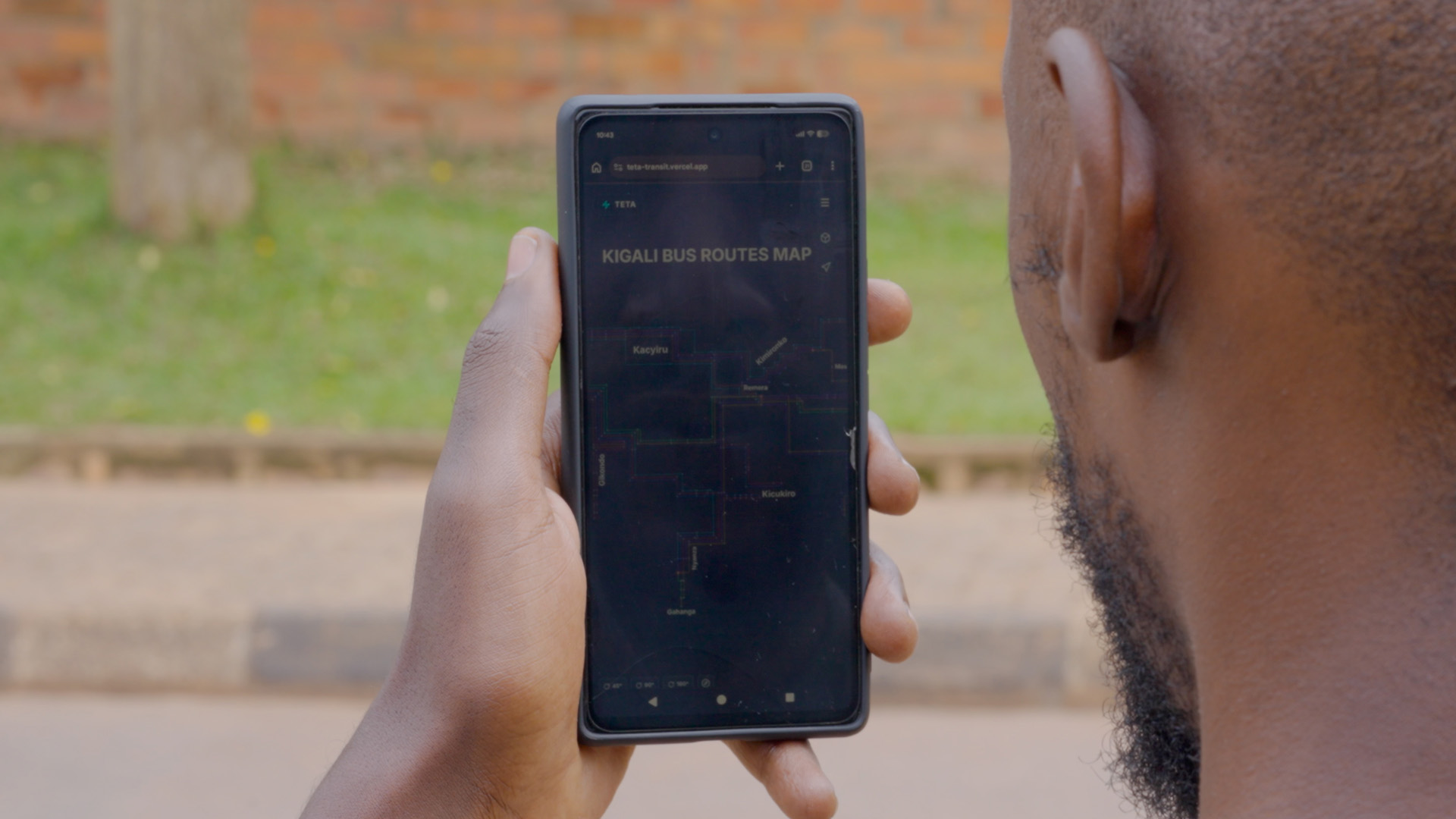
Passengers can access estimated arrival times through a smartphone app or web platform, while non-smartphone users can request updates via USSD. On the operator side, Haraka Pro provides a subscription-based dashboard offering route-level demand visibility, predictive insights and fleet management tools.
Unlike traditional GPS systems that only track vehicles, HarakaPlus links supply and demand, creating a dynamic feedback loop that supports data-led dispatch decisions in high-density, low-infrastructure transport environments.
The founding team includes Bilen Gebremariam, COO and co-founder, and Germain Rwibutso, CTO and co-founder, who oversees the platform’s technical infrastructure.
Video transcript
I have often seen how transport, and especially public transport, changes people's access to opportunities—healthcare, education, jobs, all of that. And so for me, it was important to use engineering to redefine how systems work, because a lot of these systems are often inefficient or unaffordable for Africans.
With our innovation, HarakaPlus, we are bridging the communication gap between bus operators and passengers. Bus operators do not have visibility on passenger numbers and location, and that causes long waiting times for passengers. So we are creating data systems that provide bus visibility for passengers while providing bus operators with passenger numbers and passenger locations to optimise the entire system.
In short, we are turning the informal public transport system as it is today into a data‑driven system. Winning the Africa Prize for us—for my team—will not just be a validation of what we are doing and what we are building. It would also be a validation of our belief that African infrastructure problems need African‑engineered solutions.
The impact
Since launching its MVP (minimum viable product) in 2025, nearly 2,000 users have accessed the platform, with daily repeat usage approaching 500.
In pilot tests across three Kigali routes, average passenger waiting times fell by 38%, bus idle time dropped by 44%, and on-time performance improved by 40%. The company is now refining adoption and preparing for expansion into larger regional markets.
HarakaPlus has become the first private company admitted to Rwanda’s Smart Mobility Lab, signalling growing institutional recognition.
Now shortlisted for the Africa Prize for Engineering Innovation, Millicent hopes to strengthen the company’s commercial model and scale regionally.