Overview
Across sub-Saharan Africa, overcrowded classrooms and teacher shortages leave more than 250 million students without the individual support needed to succeed. Jangalma addresses this gap through a scalable digital platform combining curriculum-aligned content, AI diagnostics and access to qualified tutors. Designed for low-spec Android devices and low-connectivity environments, it enables learners to study anytime, anywhere. Since launching in 2024, Jangalma has reached over 200,000 learners. The platform has achieved a 97.2% graduation success rate and 80.1% progressed to the next least grade level, demonstrating its potential as an inclusive solution to one of the region’s most urgent education challenges.
The challenge
Across Francophone Africa, additional academic support is often limited to those who can afford private tutoring. Inconsistent connectivity, overcrowded classrooms, and limited school capacity to provide personalised attention at scale mean many learners fall behind, particularly students from low-income households, girls, and students with disabilities. Barriers also include the cost and availability of qualified tutors and the need to align content with multiple national curricula and regulatory environments.
Moustapha Diop first encountered this challenge in 2015 while offering informal tutoring services in Senegal, where he saw first-hand how financial and structural barriers prevented many capable students from succeeding. In recent years, students have become increasingly comfortable with digital learning, creating an opportunity to deliver structured, measurable, andpersonalised support that remains affordable and accessible in low resource settings.

My biggest pride is when people tell me that, thanks to what we’ve built, students can learn even when they have no financial means. Being selected for the Africa Prize is a real honour, and I hope it will help us strengthen our impact and scale across the continent.
The innovation
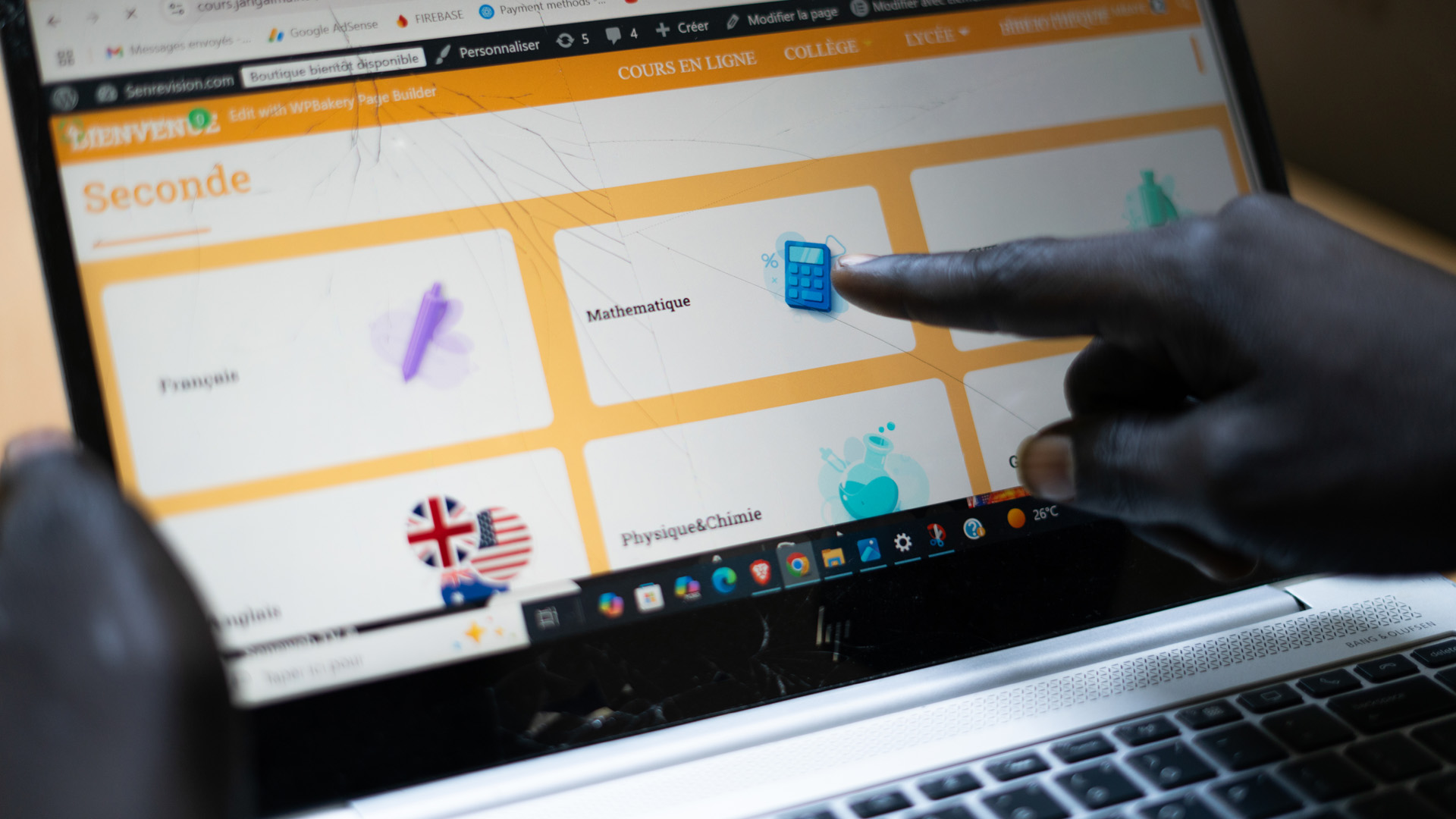
Moustapha is the CEO of Didactic Corporation SAS and the founder of Jangalma, a solution created to provide personalised academic support at scale. Since formalising this initiative, he has collaborated with the Ministry of Telecommunications and Digital Economy of Senegal, schools, startups, and the national agency ADEPME to support SME development, strengthen implementation, and scale the project. Jangalma combines free curriculum-aligned digital content with AI diagnostic agents that assess a learner’s level, identify knowledge gaps and generate personalised study plans. The platform’s design includes machine learning components that adjust pacing, sequencing, and revision priorities based on performance and engagement data. Study plans evolve continuously as learners progress. Most of the platform’s services are free, while AI features are available via a low-cost subscription (approximately $0.80–$3.30 per month). Private tutoring, including at-home support, is also optional.
A human support layer allows families to book vetted teachers through the app, with structured session reports feeding back into learner profiles. Parents access a real-time dashboard tracking attendance, punctuality and progress. The platform includes offline functionality, storing progress locally and synchronising once connectivity is restored. Lightweight design ensures usability on low-end Android devices, and accessibility features such as audio lessons and adjustable text support inclusive learning.
Video transcript
Across Africa, millions of students struggle to succeed at school simply because they lack access to quality learning support. Our solution, Jangalma, combines technology with human support. Students deserve personalised guidance, adapted to their needs.
Students can follow a learning programme adapted to their own pace. As a result, they can improve their academic results. Today, more than 200,000 learners are using Jangalma, and 60% come from underprivileged communities.
Winning this Prize would be a great honour. Our ambition is clear: to impact more than one million learners across Africa, and this Prize would help us make that vision a reality.
The impact
Since launching in 2024, Jangalma has reached more than 200,000 learners and works with over 500 qualified teachers across Senegal and Mauritania. A total of 60% of users come from low-income households,40% of all users are girls, and more than 1,000 students with disabilities have accessed tailored support. Strong retention among premium subscribers and tutoring clients have shown Jangalma is already popular amongst both students and teachers. Growth has been achieved without advertising, driven primarily by word of mouth among students and families.
With support from the Africa Prize, Jangalma aims to strengthen its engineering infrastructure, enhance AI-driven personalisation, improve the offline capability and scale across multiple countries through expanded server capacity. Beyond learning outcomes, the platform has created employment for hundreds of teachers and increased transparency for parents. As it expands, Jangalma aims to reach one million learners, contributing to more equitable access to high-quality secondary education across the region.