Overview
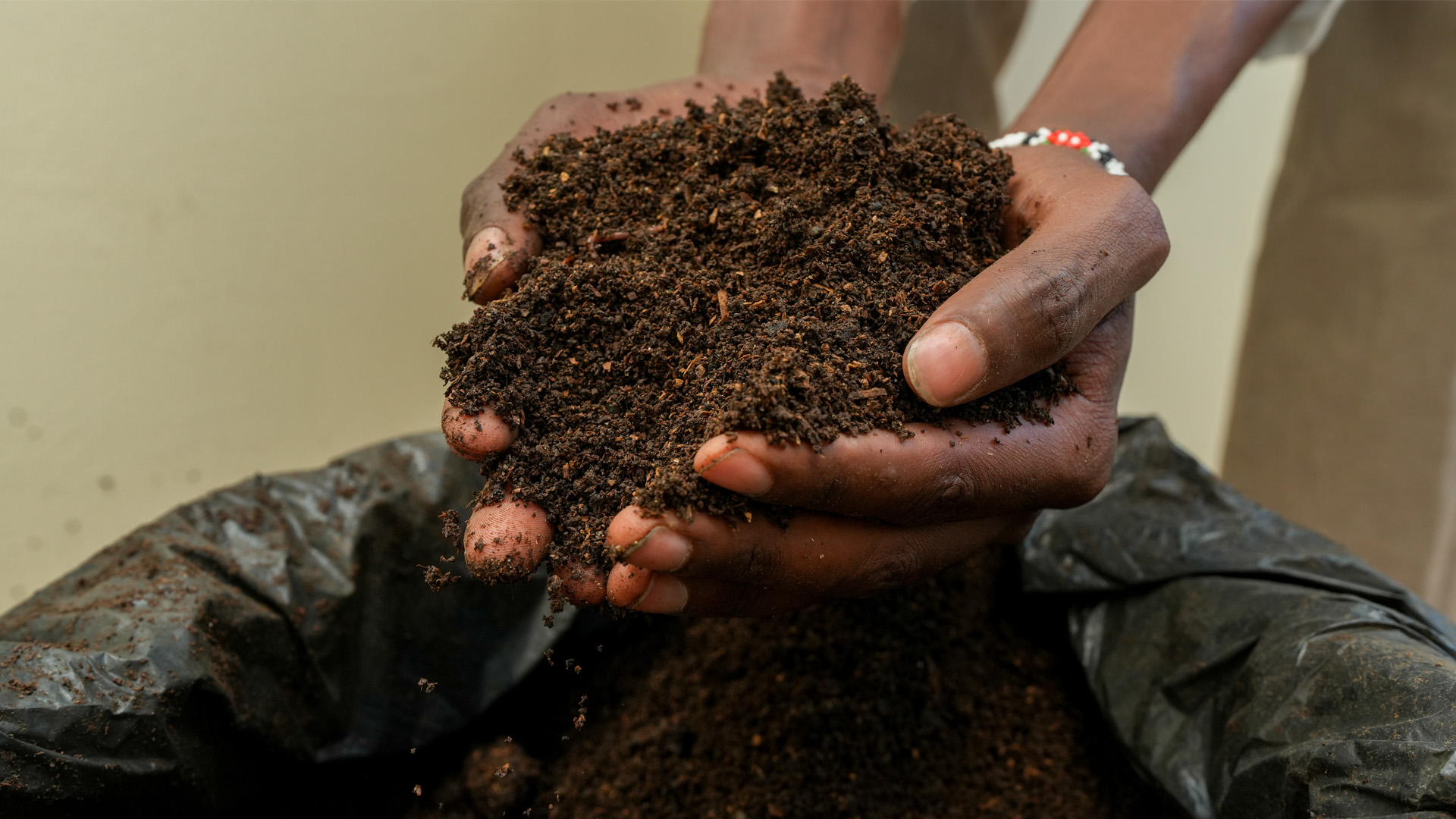
Royford Mutegi, Managing Director of Vermi-Farm Initiative, alongside co-founder and Head of Research and Product Development Diana Wairimu, has developed the Automated Vermicomposting device, a patented, solar-powered composting unit that transforms organic waste into pest-resistant fertiliser pellets within 7-10 days. Installed at community level and operated through farmer “village banks”, the system combines applied bioscience, automation and decentralised manufacturing to regenerate soils locally.
Since early deployment in 2023, the technology has been installed in nearly 100 village banks, serving more than 6,400 farmers. Early results show yield increases of up to seven times, chemical input reductions of 47%, and improved soil health across participating communities.
The challenge
Kenya’s smallholders face three interconnected challenges: declining soil fertility, rising fertiliser costs, and fragmented waste management systems. Chemical fertilisers offer short-term gains but degrade soil structure over time, locking farmers into repeat purchases. Meanwhile, organic waste from markets and households are widely discarded as rubbish and left to rot, releasing methane gas and wasting nutrients. Food waste is rarely reintegrated into agricultural systems.
Royford grew up in Igoji, on the slopes of Mount Kenya, where his mother was a smallholder farmer and the family’s primary income-earner. He witnessed first-hand how soil degradation, pests and climate shocks reduced harvests season after season. As fertiliser prices spiked because of global supply chain disruptions, many farmers could no longer afford fertilisers and were forced to plant on already depleted land.
Royford identified a systemic opportunity: if communities could convert local waste into high-quality fertiliser onsite, they could simultaneously regenerate soil health, cut costs, and reduce environmental impact.

Being shortlisted for the Africa Prize is a deep honour. It is one of the most respected engineering programmes, and the mentorship and partnerships will help us scale faster.” n the real world.
The innovation
Royford studied applied physics and computer science at the Multimedia University of Kenya and is currently pursuing a degree in business and entrepreneurship at the Open University of Kenya. He leads a multidisciplinary team with Diana Wairimu, Head of Research and Product Development, alongside specialists in technology development, operations, legal affairs and data systems.
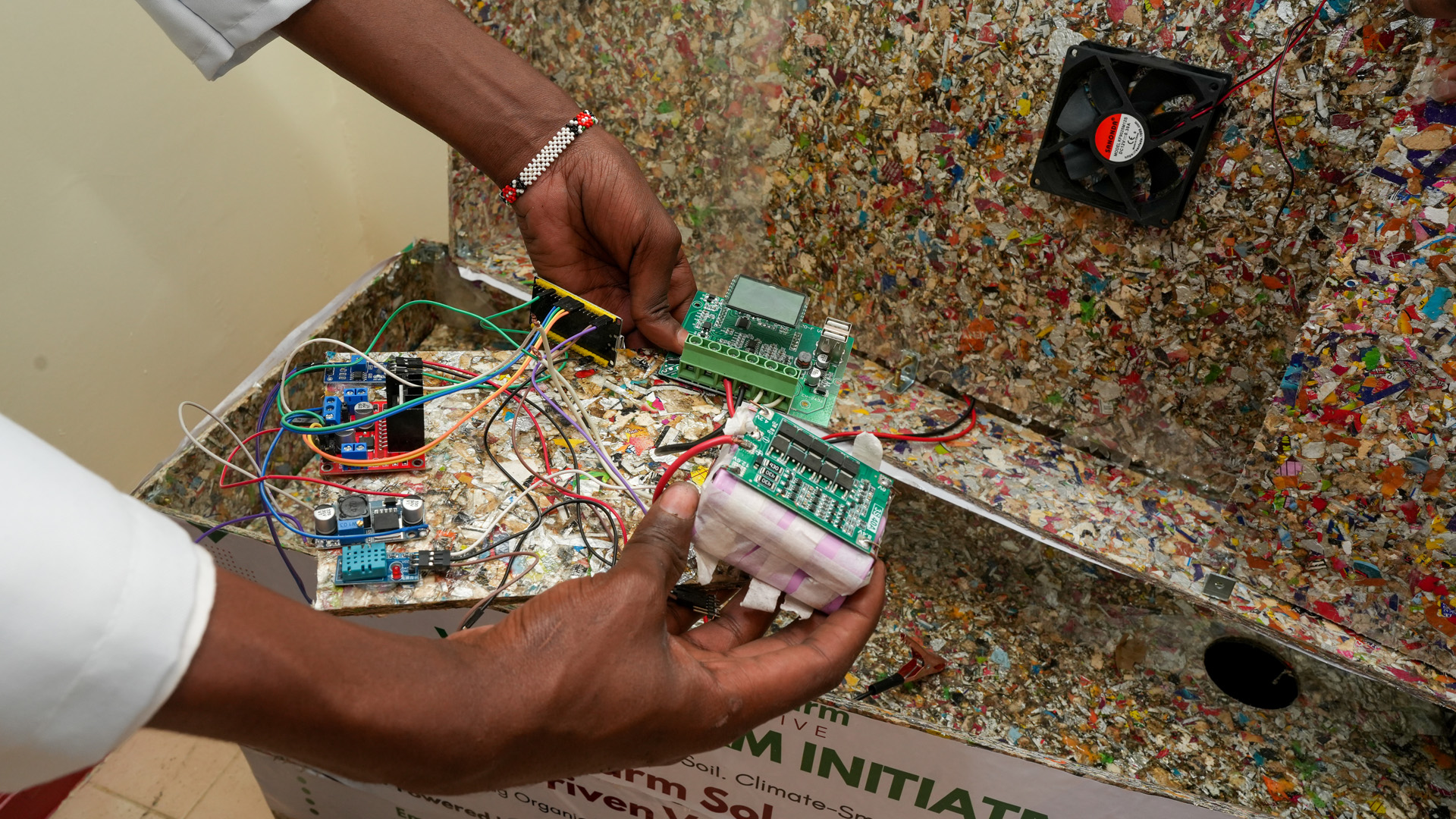
The Automated Vermicomposting Device uses selected high-efficiency earthworm species and microbial inoculation to accelerate decomposition. Organic waste from markets, households and farms is shredded, mixed and then processed inside a solar-powered chamber that maintains optimal temperature, moisture and aeration.
Sensors collect real-time data on temperature, moisture and processing time. AI-supported control systems analyse this data to predict optimal decomposition conditions, flag maintenance needs and standardise output quality across multiple devices. The compost is then dried and pressed into uniform, pest-resistant pellets.
Each device is installed at community level within farmer groups known as “village banks”. Farmers can purchase individual bags of fertiliser or subscribe for a small monthly fee, gaining regular access and dosing guidance. Adoption and day-to-day support are led by “village champions”: young women and youth from the local communities, who help translate training into local dialects, support correct application, and act as the frontline link between farmers and the Vermi-Farm team. The system is modular, locally fabricated and designed for off-grid use.
Video transcript
I drew my inspiration from having grown up in a small rural farming community in Igoji, and I got to see the first-hand effect of soil degradation, how they result into poor crop yields. And for many women like my mother, who are breadwinners, they have been living in abject poverty because they depend on farming for sustenance. And I found a way I can be able to bring practical solutions, after having studied computer science.
Our innovation is an AI-driven, automated vermi composting bin that is able to convert the food waste from our market centres into highly nutritious organic fertilisers within five to seven days. I’m looking forward to the visibility that comes with the Africa Prize, because we are able to unlock new catalytic support to help us in accelerating the impact that my team and I are trying to achieve. This is a deep honour for the small farming community and how my lived realities are shaping the lives of over 70.5 million smallholder farmers.
The impact
Since piloting began in 2022 and early deployment in 2023, 97 village banks have adopted the device, serving more than 6,400 farmers, of which 87% are women. Each unit processes up to 200 kilograms of waste weekly and produces around 50 kilograms of fertiliser for local distribution.
Field data shows yield increases of up to seven times in certain crops, input cost reductions exceeding 60% per season and reported income increases of up to 87% within two planting cycles. A total of 94% of participating farmers report improved soil health and reduced pest pressure.
By diverting organic waste from landfill and reducing reliance on synthetic fertilisers, the model lowers emissions while strengthening local agricultural resilience.
With the support of the Africa Prize, the team plans to expand AI-driven monitoring, integrate soil data for tailored fertiliser recommendations, and scale modular manufacturing across additional counties.