Overview
Africa produces just 1% of the world’s vaccines despite housing 17% of the global population. One reason for this is the fragile biomedical training pipeline: tissue culture labs are expensive, highly sensitive environments where mistakes destroy weeks of work and thousands of pounds in reagents. For many students, especially in under-resourced institutions, access to hands-on lab experience is limited or non-existent.
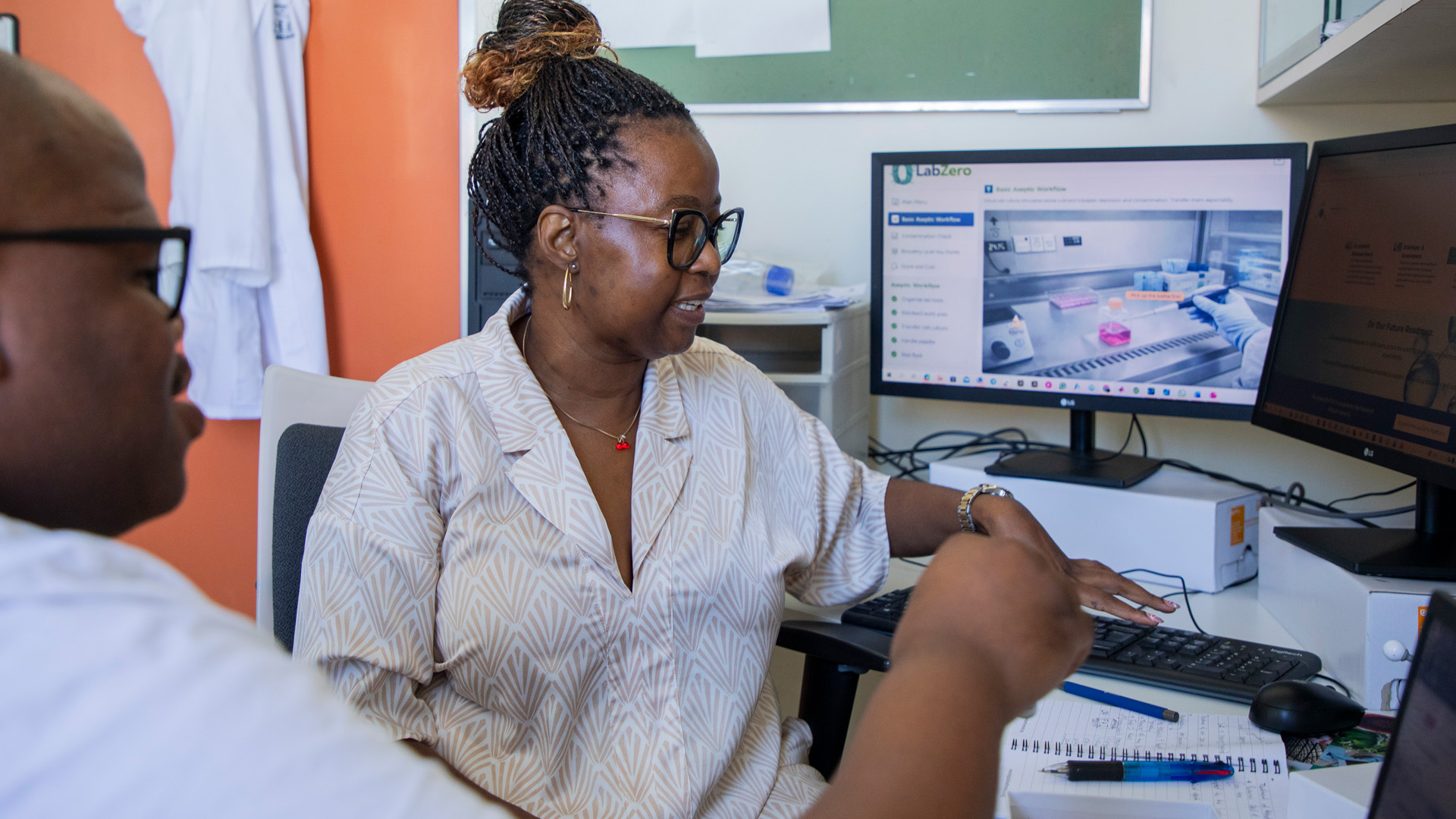
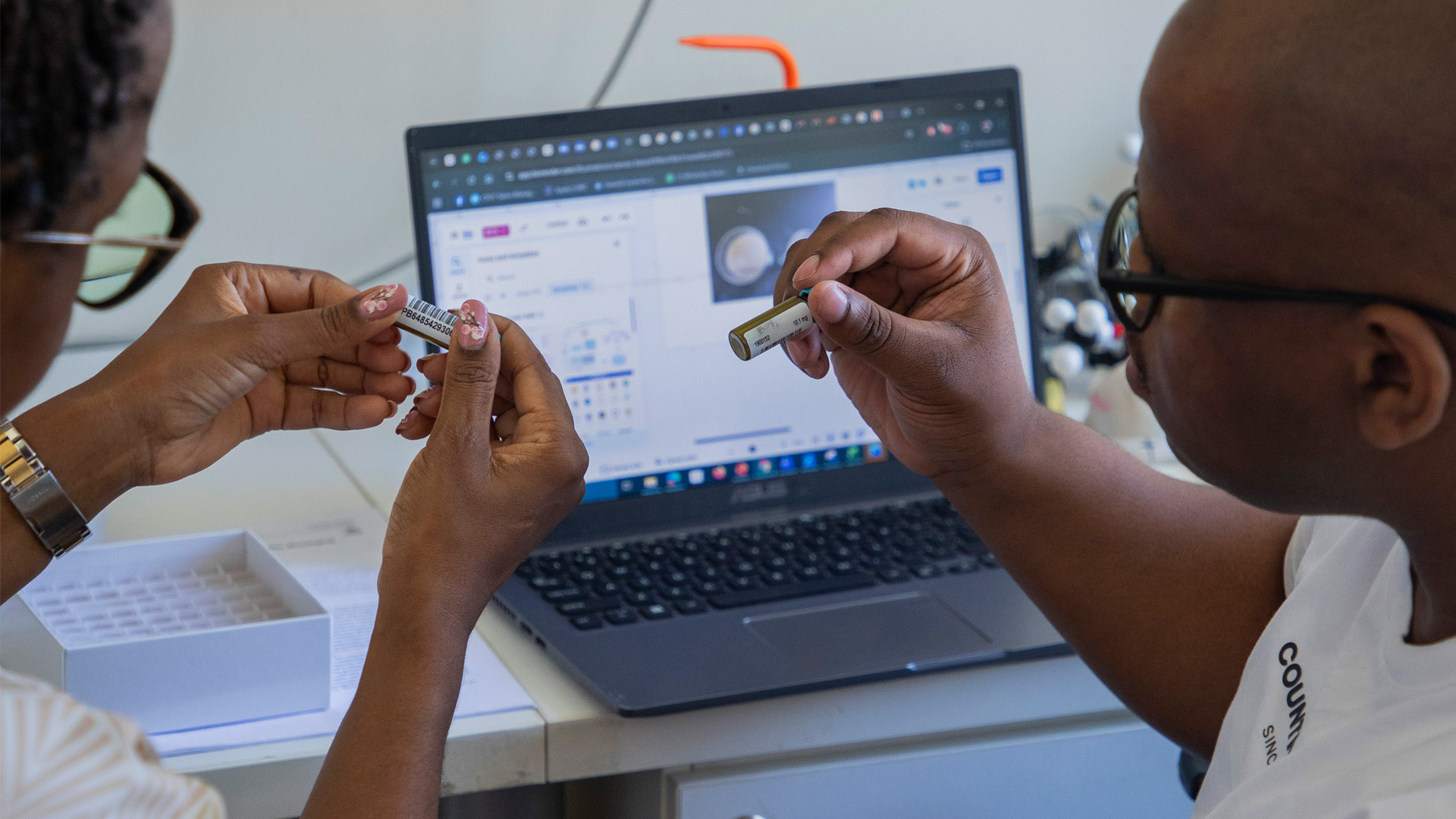
LabZero addresses this gap through a browser-based virtual lab that simulates the complete mammalian cell culture workflow before students enter a physical facility. Founded by biomedical researcher Sincengile Ntshingila, the platform allows learners to practice safely, reduce costly contamination, and minimise plastic waste.
The challenge
Tissue culture labs sit at the foundation of drug development, vaccine research and regenerative medicine. They are also some of the most unforgiving laboratory environments to learn in. A small error, touching the wrong surface, breaking a sterile sequence, or mishandling reagents, can contaminate an entire experiment.
For students, this creates intense pressure. For institutions, it creates financial and environmental strain. A single contamination event can cost between £3,000 and £15,000. Labs rely heavily on single-use plastics to maintain sterility, meaning repeated failed attempts generate significant waste.
After pivoting from a career in agricultural economics to pursue a biomedical PhD, Sincengile entered the lab as a complete newcomer. She recalls how steep the learning curve was and how much patience and supervision it required from senior researchers. She also saw how students from underfunded universities often had little exposure to specialist lab facilities at all.
After originally exploring ways to recycle laboratory gloves, her team realised they were addressing a symptom, not the root cause. The deeper issue was waste generated through training. LabZero was born from the idea that learners should build competence digitally before ever handling real cells.

For me, it’s the mentorship, guidance and community that I’m most looking forward to in the Africa Prize. This journey can feel lonely and scary, so being around like-minded people makes all the difference.
The innovation
LabZero is a low bandwidth, 2D virtual simulation of the full mammalian cell culture workflow. As Founder and Principal Investigator, Sincengile leads a multidisciplinary team including a biomedical engineer and a software developer, working to translate precise laboratory practice into an accessible digital environment.
The platform guides users step-by-step through core tissue culture procedure, including lab entry and aseptic gowning, reagent preparation and disinfection, cell seeding and monitoring cell growth, cell splitting and cryopreservation. These processes are structured within a modular simulation architecture, allowing additional laboratory procedures to be added as the platform evolves. The simulation also models key laboratory equipment such as biosafety cabinets, incubators, centrifuges and pipetting systems, enabling users to practise correct equipment handling and workflow coordination within a controlled virtual environment.
At the core of the system is a protocol sequencing engine that mirrors real laboratory workflows. Each action must be completed in the correct order before users can progress. If a user performs steps out of sequence or introduces contamination risk, the platform flags the error in real time and explains the correct procedure.
The system monitors user behaviour within the simulation to detect actions that could introduce contamination, reinforcing proper aseptic technique before students handle real cells or reagents. This AI-powered feedback engine prevents learners from skipping critical steps and helps build confidence through repeated virtual practice. LabZero is designed as a competency-based training platform, requiring users to demonstrate mastery of each laboratory procedure before progressing, supporting structured laboratory skills development for students and early-career researchers.
An integrated analytics layer also quantifies savings in reagents, plastic consumables and carbon emissions per session, linking scientific accuracy with measurable sustainability impact. It also enables instructors to track learner performance, identify common procedural errors and adapt training programmes based on real usage data.
The platform’s lightweight 2D architecture ensures it runs smoothly on standard laptops and smartphones, making advanced laboratory training accessible even in low-bandwidth environments. While the current prototype was designed to maximise accessibility, LabZero is now being expanded into a 3D interactive laboratory simulation. This next-generation version will allow users to navigate a virtual lab, interact with equipment and perform procedures in a more immersive environment.
Video transcript
I was inspired to start LabZero after experiencing the amount of waste that happens in a tissue culture laboratory. When you are teaching new students, they make so many mistakes, and it produces a lot of plastic waste, carbon emissions, but most importantly, it’s very costly. What can one do to actually stop this right at the beginning? And a computerised simulation was the answer. So you train them before they can even interact with it in an actual physical lab.
So LabZero is a virtual tissue culture BSL2 simulator that trains of how to do aseptically, the processes that happens in a tissue culture lab. It reduces cost. It reduces waste. Winning the Africa Prize would mean accelerating the development of LabZero, would mean more deployment, more access especially to those that can't access a lab.
The impact
LabZero is currently pre-revenue and in advanced development, but early feedback is positive.
An MVP pilot with 62 users, 55 students and 7 researchers, showed that 70% rated the platform 4 or 5 out of 5. During testing, the system flagged more than 340 protocol deviations, demonstrating its real-time error detection capability.
The team is working with major South African institutions including the University of Cape Town and other research bodies to convert pilot engagements into institutional subscriptions.
In the long term, LabZero aims to reduce training costs by up to 40–60%, cut plastic and reagent waste by more than 90%, save an estimated 2.5 tonnes of CO₂e and 150 kg of plastic per department annually and expand equitable access to biomedical training.