Overview
Across sub-Saharan Africa, more than 400 million people lack access to safe drinking water, with rural communities often facing outbreaks of cholera, and other waterborne diseases, especially during rainy seasons or floods.
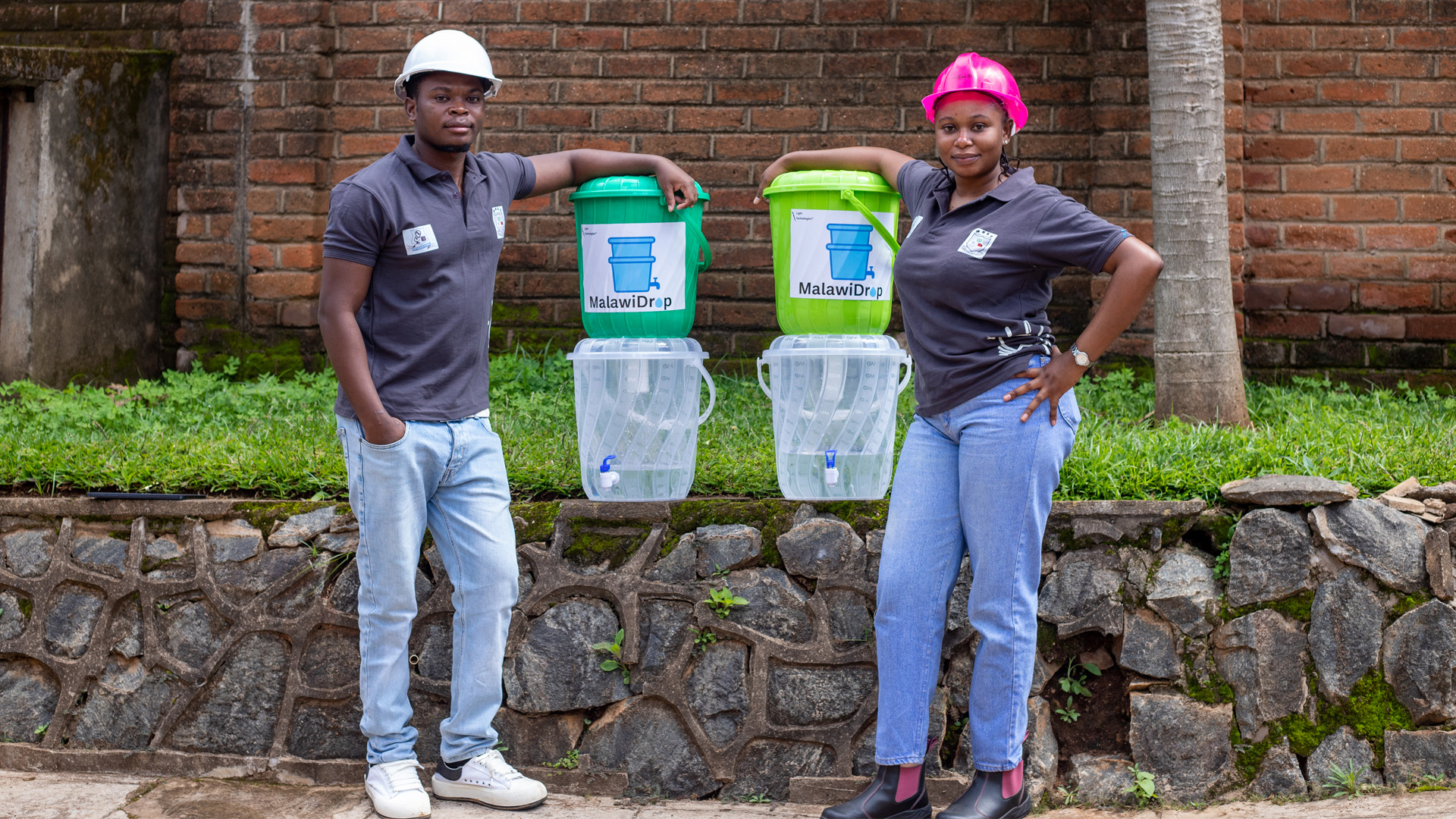
MalawiDrop is a new automatic water treatment device designed for off-grid household use, making at-home water purification both cheaper and more accessible. Using a refillable chlorinated resin cartridge, the system releases controlled doses of chlorine as water flows through, eliminating guesswork and reducing health risks from over or under dosing.
Backed by an $88,000 commercialisation grant and early pilot deployment in a 50,000-person township, MalawiDrop is now scaling production across Malawi and Rwanda, with plans to reach thousands of households in off-grid communities in sub-Saharan Africa.
The challenge
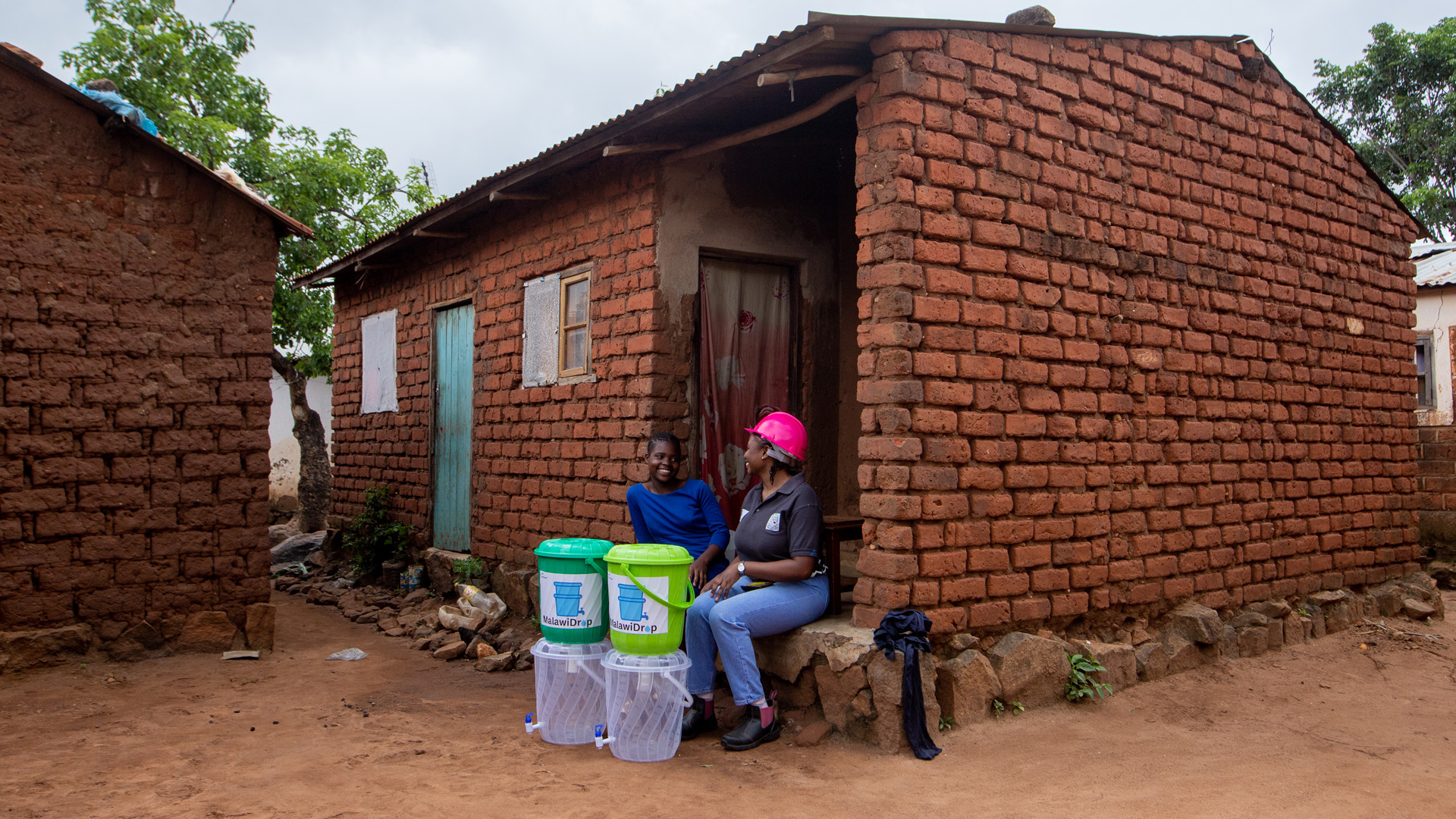
In Malawi, access to treated piped water cannot be taken for granted. Even in semi-urban areas, households regularly rely on wells or surface water sources that must be treated before use.
Tadala has seen the water access gap up close. “Even as I speak, there are people just five kilometres from where I live who must collect water from wells or rivers,” she explains. These realities inspired her to focus her engineering research on improving water treatment solutions for underserved communities.
Although chlorine is widely recognised as effective for sterilising water in rural Malawi, safe dosing remains complex and for many households, especially where literacy levels are low, consistent treatment is difficult to maintain at home. Liquid chlorine requires measuring, testing strips and consistent supply chains. Over-dosing affects taste and health, while under-dosing leaves pathogens behind.
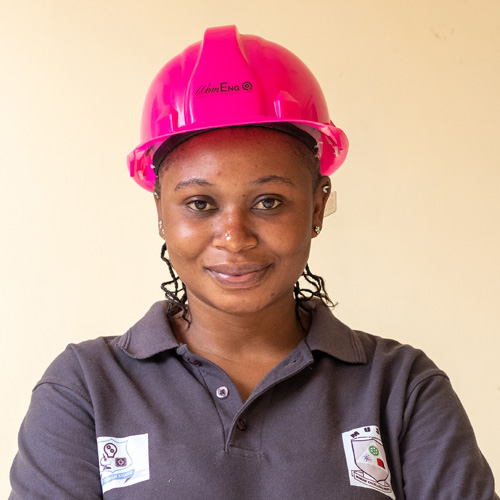
I didn’t expect my work to leave the lab and go into communities. I was experimenting on artificial water at first, contaminating it myself for testing. To see it now moving beyond research and into real households is something I’m very proud of.
The innovation
Tadala Mtimuni, a chemical engineer and co-founder of MalawiDrop, began developing her innovation during her undergraduate studies in 2018. What started as a prototype funded by a small government grant evolved into her master’s research in chemical engineering at Stellenbosch University, where she focused on water treatment systems.
MalawiDrop consists of two stacked buckets connected by a refillable cartridge containing a chlorinated Merrifield resin. As untreated water flows from the top bucket to the bottom, the resin releases a consistent, pre-determined dose of chlorine that treats the water in seconds. Laboratory testing and modelling indicate the system can inactivate over 99.99% of pathogens in less than a second per litre.
The innovation relies on a combination of chemistry and engineering. Tadala and her team impregnate a merrifield resin with chlorine using sodium dichloroisocyanurate (NaDCC), enabling a stable, consistent release that avoids the hazards of alternative halogens and the inconsistencies of liquid dosing.
Cartridges can last between six months and two years depending on usage and are refillable rather than disposable. To support access and ongoing maintenance, the team plans to distribute MalawiDrop through community “water champions” who run demonstrations and trials, alongside local water kiosks where households can collect the device and return for cartridge refills. Kiosks are designed to work like familiar mobile money kiosks, creating a convenient local touchpoint for users, and a practical route for refills, which cost around £7.
MalawiDrop is led by a multidisciplinary team including co-founder Ananias Cyrus Zulu and specialists in production and operations. Alongside scaling across Malawi and Rwanda, the team plans to expand water workshops and regional distribution points to strengthen access and after sales refills. They are also developing an enhanced version with smart sensors to monitor cartridge status remotely, strengthening quality control and enabling scale through a grant partnership with Rwanda.
Video transcript
So for me, engineering was just a natural instinct because I had strong interest in mathematics and also the desire to validate, question, explore ideas, and also to prove the science behind why things happen. So my innovation is a water treatment device which basically disinfects water, raw water from shallow water sources. So it uses chlorinated resin which releases chlorine in small doses, to prevent unpleasant smells which pose health effects in users. So winning the Africa Prize would basically mean that it has validated the amount of work, the amount of years I’ve spent building innovations for the underserved populations.
The impact
MalawiDrop is currently being piloted in a township of approximately 50,000 people, with plans to roll out 5,000 units across Malawi and Rwanda. Priced at approximately £7 per device and £4 per refill, the system is designed to remain accessible to low-income households while creating sustainable, locally managed refill networks, costing no more than £11 a year.
Building on its commercialisation grant and collaboration with Rwandan partners to integrate smart monitoring, the team is working to scale production nationally and regionally. Africa Prize support would accelerate manufacturing capacity, expand distribution and establish additional workshops across Malawi’s three regions.