Overview
Cervical cancer remains one of the most preventable causes of death among women, yet it still kills more than 350,000 each year, predominantly in low- and middle-income countries where screening and treatment are harder to access. Zambia has one of the highest incidence rates globally, where long travel distances, local stigmas and clinic backlogs delay diagnosis and treatment.
Tafadzwa Munzwa, a medical doctor and engineer, co-founded DawaMom with fellow physician Takunda Mugwagwa, supported by software engineer Chungu Chama and business executive Progress Mahureva. ‘Dawa’, meaning ‘medicine’ in Swahili, reflects the platform’s aim to close the gap between health information and life-saving action. The platform combines a multilingual AI chatbot with community health workers, mobile clinics and AI-assisted diagnostics, to enable women to move seamlessly from education to screening and referral. To date, DawaMom has supported more than 20,000 women across Zambia, integrating digital tools with in-person care to improve access and trust.
The challenge
Tafadzwa’s route into women’s health began in medical school. Originally exploring remote blood pressure monitoring, inspired by family experience of hypertension, he pivoted after his cousin experienced complications during her first pregnancy. As he looked more closely at maternal care in Zambia, he saw that the risks extended beyond hypertension. Delayed diagnosis, long clinic waiting times, limited imaging capacity and high cervical cancer rates were placing women at avoidable risk.
In many of the communities DawaMom serves, barriers are layered. Many women lack access to clear, culturally appropriate information. English-only digital services exclude those who primarily speak local languages. Literacy levels vary. Even when women recognise warning signs, they may not know where to go next or face overstretched facilities with limited diagnostic tools.
Another critical factor is that purely digital tools can struggle to gain acceptance without a real human presence and reassurance. For maternal and reproductive health in particular, local stigmas and privacy concerns can further delay care.
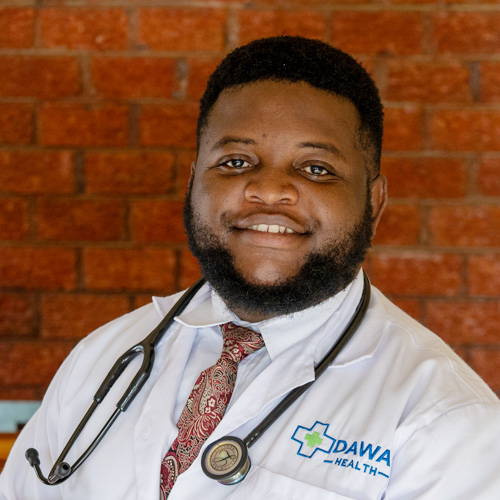
We are transitioning to scale now, and we want the support from the Africa Prize to move us from a nice engineering project to a proper streamlined business that works in the real world.
The innovation
DawaMom is designed as an end-to-end maternal and reproductive health pathway, rather than a standalone tool. It integrates patient education, AI-assisted diagnostics and coordinated clinical care.
On the patient side, women interact with a multilingual chatbot built using a retrieval-augmented generation system. Tafadzwa’s team curated and translated a maternal and reproductive health dataset into seven local languages widely spoken across Zambia and Zimbabwe. Questions are matched against this expert-verified dataset to generate medically grounded responses in the user’s chosen language. A voice interface is in development to support women who prefer speaking to typing.
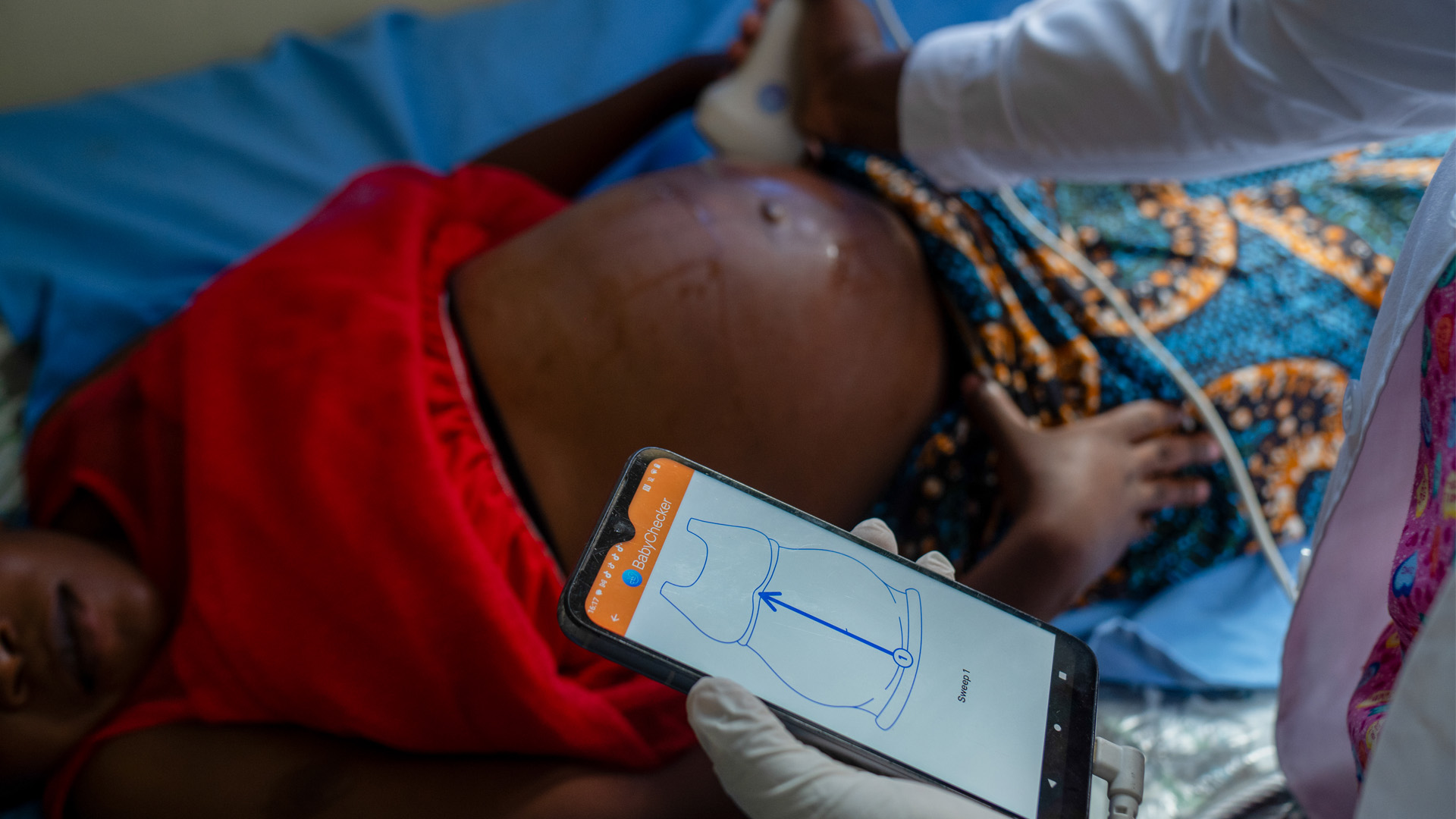
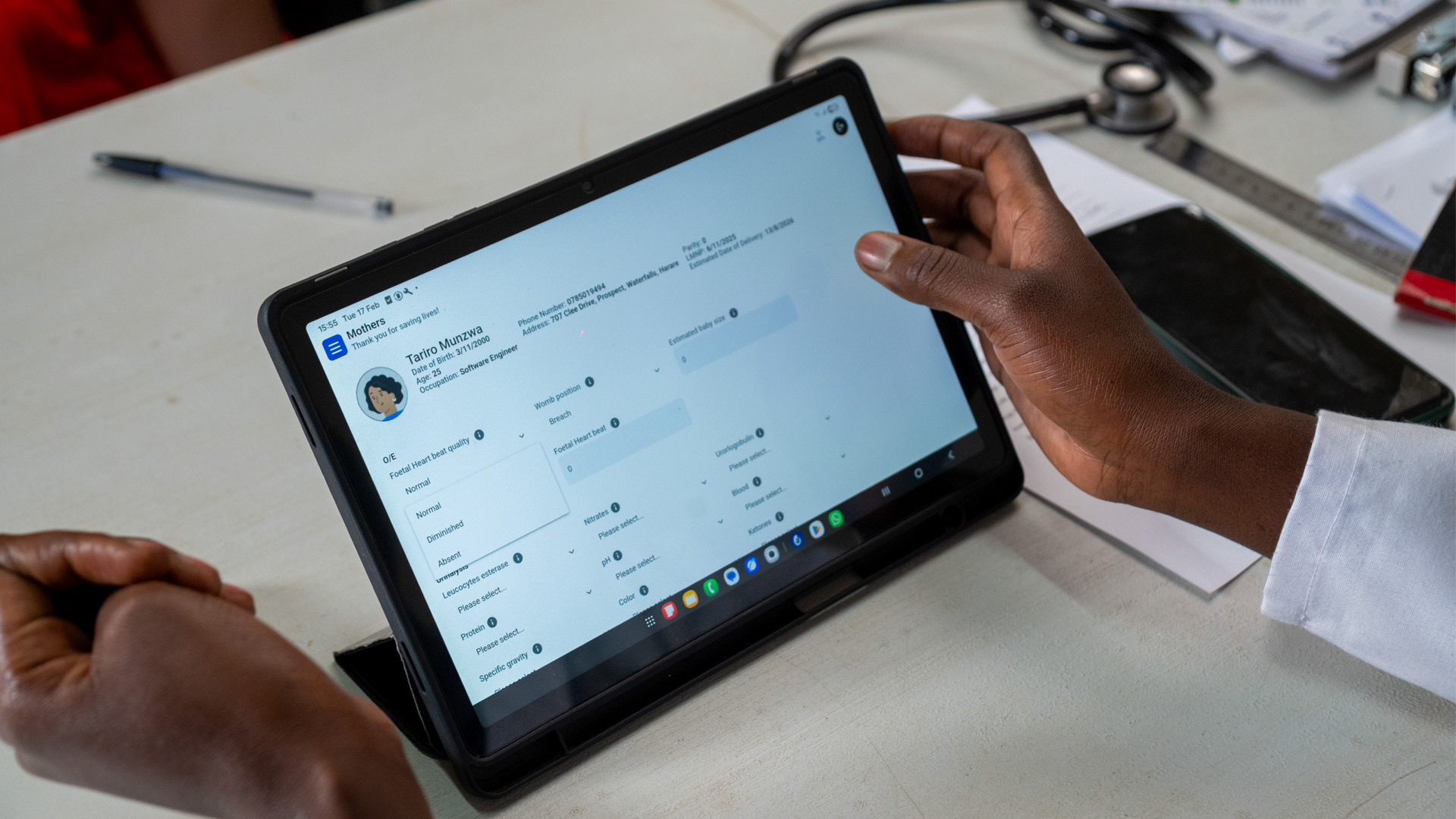
On the clinical side, DawaMom provides a structured portal used by clinicians across partner clinics and mobile units. Health workers record patient history, examination findings and risk factors, while integrated AI tools extend diagnostic capacity. For ultrasound, the model uses a smartphone-connected probe and a “blind sweep” workflow so midwives and clinicians who are not specialist sonographers can still capture scans and receive a report focused on key risk parameters. For anaemia screening, the platform uses a non-invasive approach where a clinician photographs the patient’s lower eyelid and a computer vision model estimates haemoglobin levels, supporting faster triage. For cervical screening, the approach aims to reduce subjectivity by using smartphone images and computer vision models to identify and classify abnormal changes, supporting earlier identification of high-risk cases.
Video transcript
So engineering chose me. I'm a medical doctor by training, but I believe using science to solve problems at scale is important, and that's what drove me into engineering.
So DawaMom is an AI-powered platform that's essentially empowering last mile health workers, like midwives and clinical offices, with diagnostic capabilities. So we’re integrating artificial intelligence to be able to do things like ultrasound, anaemia and cervical cancer in a unified platform, where diagnostic capabilities is traditionally not available.
So of course, winning the Africa Prize would accelerate our work. It would help us improve our digital health platform, improve the AI capabilities and integrate more last mile clinics where it will eventually help underserved mothers in the communities we are operating in.
The impact
DawaMom has supported more than 20,000 women through its pilot clinics and community network. The model has evolved significantly based on feedback, shifting from an English-first chatbot to a multilingual system supported by 35 trained community health workers who build trust locally.
The team’s cervical screening model achieved accuracy levels above 96% after fine-tuning on local data, winning the Google Data Science for Africa competition. The platform continues to expand its diagnostic capabilities while strengthening clinic partnerships and logistics.
With support from the Africa Prize, Tafadzwa aims to transition from pilot-stage innovation to a scalable, commercially sustainable model capable of expanding across sub-Saharan Africa.